The Wine Harvest of 2026
Its Vendange Time
FOOD, WINE AND HOME
9/11/20264 min read
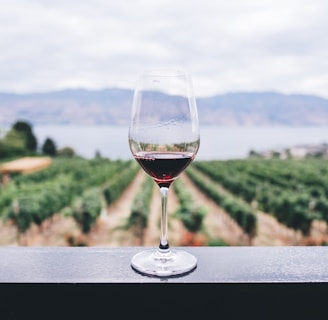
If you should travel within our département of Hérault, you will rarely see any livestock. No fields of grazing cows or sheep. No free range pigs . Just a few horses from time to time, or perhaps an odd goat. For this is wine country, part of the Languedoc wine appellation. Wherever and whenever you go, you will pass endless hectares of vines. In winter they just look like knobly old sticks, planted in serried rows. But since late spring they have been sprouting, and in recent months, every vineyard has become resplendently green. Nevertheless, work has been going on all year round: weeding, spraying and carefully pruning. Each grape variety is pruned in its own special way. At last the wine growers can see the fruits of their labour for it is now the Vendange, the time of the Grape Harvest . It started much earlier this year, because of the heat, some varieties even being ready for picking in early August. The harvest will continue throughout September.


There are nearly 80,000 hectares( 200,000 acres) of active vines in Hérault, which means well over 300 million individual vines.
The vendange is hard to ignore, for everywhere you go you will see tractors and trailers trundling along the roads, or in the fields alongside.Note the narrower distance between the tractor wheels, which allow it to proceed between the vines.


The harvesting is usually done with huge machines which proceed at a snails pace along the roads. The one pictured below, required us to be patient before we overtook it. No grumbles though, for we shall certainly be appreciating some of the wine.


Whilst the narrow tractors can go between the vines, giant harvesters straddle them. The mechanism harvests the grapes, gently shaking them free so as not to break the vines.


Traditionally, of course, grapes have been harvested by hand. Some wine producers still cherish this method, including the very special vineyard of Daumas Gassac, which is not too far from us. Not wishing to follow the strictures of the local appellation controlée rules, they grow their own varieties, and create non AOC wines. Their wines are classified " Location Géographique Protégée. St Guilhelm le Désert. Côté D'Aniane."55566666636666666696


Every year Daumas Gassac seeks a team of over 50 grape pickers for the 15-25 days of the Vendange. People come to work here in summer on the 50 hectare wine estate from all over the world.
Another of our favourite wine growers is Domaine Jordy. This small family run enterprise is always welcoming should you go there to taste their wines. With only 18 hectares of vines, they employ a team of around 15 harvesters in the autumn to gather the grapes by hand. Needless to say their wines are delicious. Since 2020 their wines have been classed as BIO (organic).


There are many ,many wine domaines throughout our region, ranging from tiny sheds, through ancient abbeys, to grand chateaus. And let us not forget the caves cooperatives, where groups of smaller growers take their wines to be bottled under their label. These can be seen in many of the villages around here. Whilst some have ther own bottling facilities, others bring in huge mobile bottling plants( emboutaillage mobile.) Also ,very small growers can group together privately to share the use of one of these mobile facilities, thus avoiding the cave cooperative label. As described in an earlier blog, it is great fun to watch, when this huge bottling lorry arrives in our local village of Soubès, and rolls down its side so that we can watch the process.


Wherever you may choose to buy wine in France, be it for a special occasion , a souvenir of your holiday, or for everyday drinking to accompany a meal, you will always be welcome to taste it first. Sometimes, the cheapest wines, can prove to be just as enjoyable. Visiting a wine domaine or cave cooperative is a highly enjoyable and interesting thing to do. What's more, when you take a sip of wine, the taste and memories of your magical visit, mingle.
Santé!