The Doctor Will See You Now
An unusual visit to the doctor
PEOPLE AND RELATIONSHIPS
1/18/20264 min read
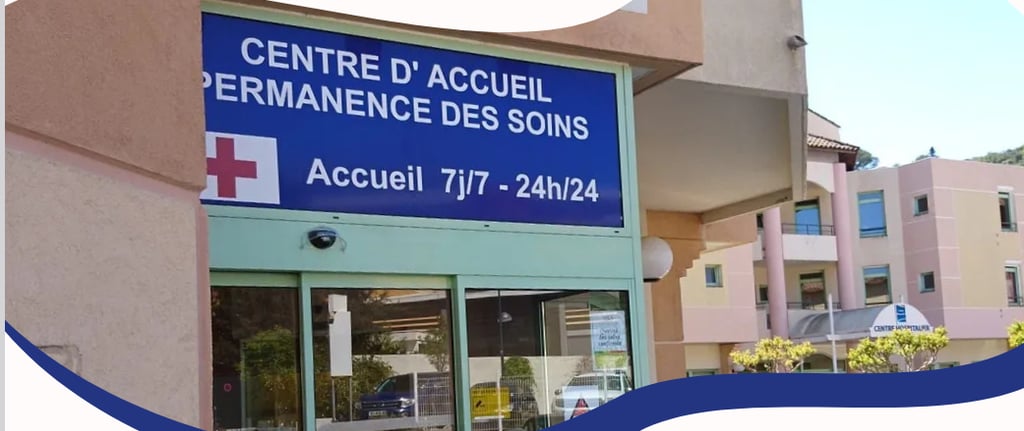
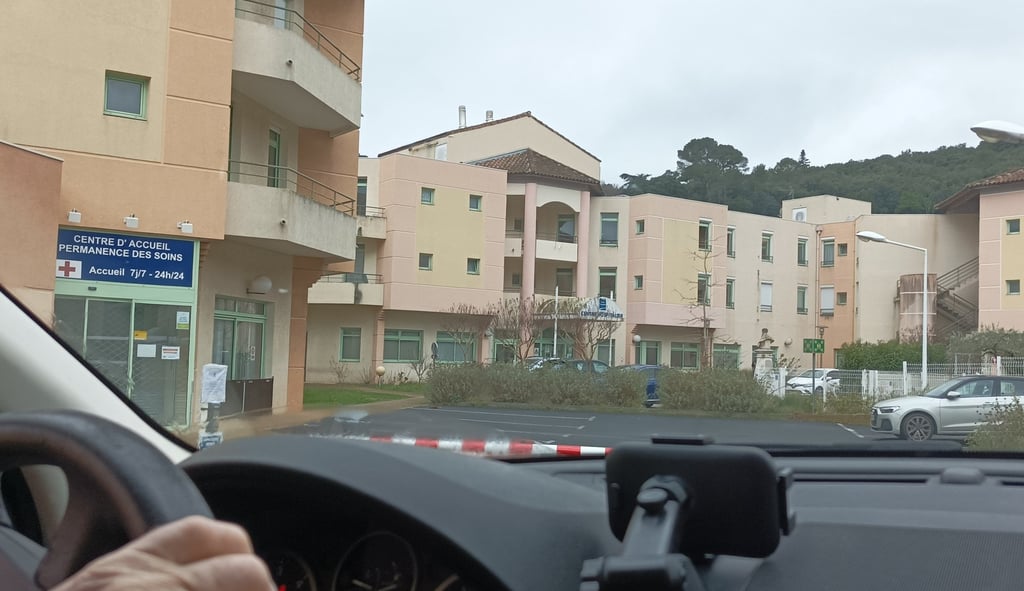
It was Saturday morning, and were planning to stay at home, as it was raining heavily. But when B. discovered that a wound he had thought was healing, had turned septic, we decided he should consult a doctor. The trouble was ,our doctor would not be on duty. No problem, B. decided. We would go to the Urgences( A&E ) in Lodève. No doubt there would be a bit of a wait, but he would certainly get it sorted there. We are very grateful for this facility, for it is available at our small local hospital 24/24 . However, when we rolled up at hospital and requested entry to the parking, the barrier refused to rise. We spotted a notice nearby. Apparently , the emergency department would be closed for the whole of that weekend. There was no further advice as to where we could go, so we decided to consult our local health clinic. This too seemed to be unmanned, save for a lab technician who told us that the hospital was suffering from a shortage of doctors, and the nearest Urgences could be found in Pézenas or Montpellier, quite some distance away. We were stumped.
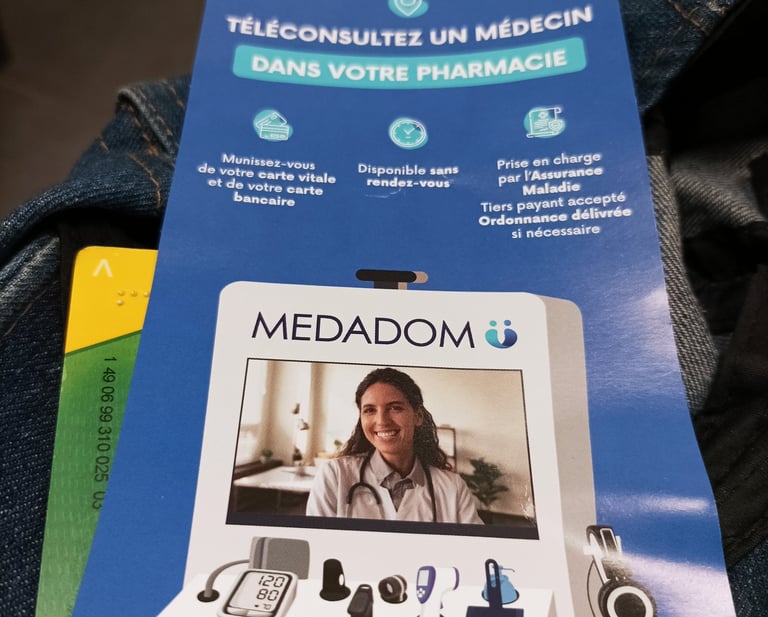
Knowing that pharmacists can sometimes give advice, we decided to try our local pharmacy. Of course, advice would be all very well, but they would not be able to prescribe anything, such as antibiotics, if they were deemed necessary. "Pas de problème," ( no problem) the friendly pharmacist said. She took us to a tiny room, where , alongside boxes of bandages and dressings; crutches; surgical stockings and orthopaedic shoes, we spotted something different. What was this? Apparently this small gadget was to be B.'s doctor for the day.
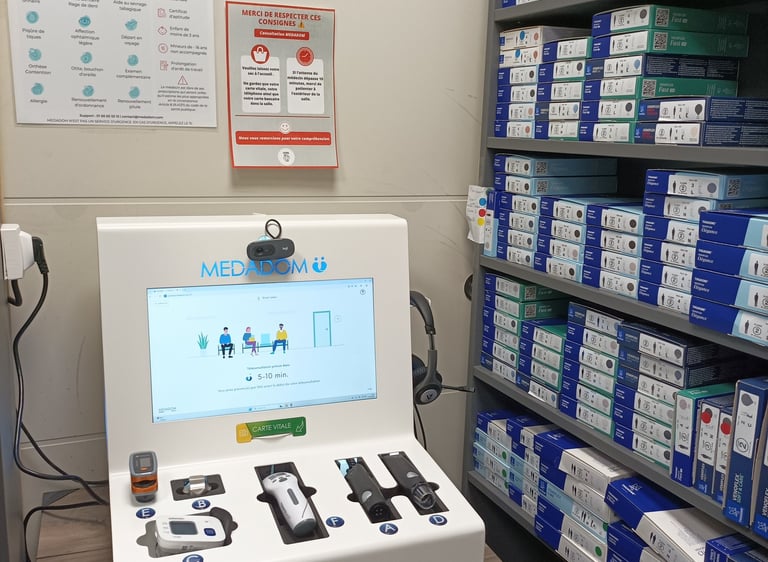
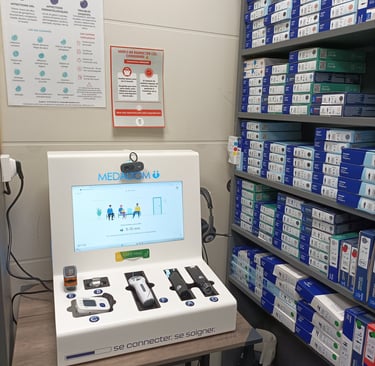
Every French resident possesses a green ,plastic card, or 'Carte Vitale,' which is the key to the brilliant French health system. Before inserting this into the Medadom machine, B. had to fill in certain details in order to subscribe to this system. Then the process began. Using the tools available on the console, B. followed the instructions. He took and registered his temperature, and blood pressure, and then registered his age and weight. He was told that a doctor would be available in about 40 minutes, and advance warning would be texted to his mobile phone.
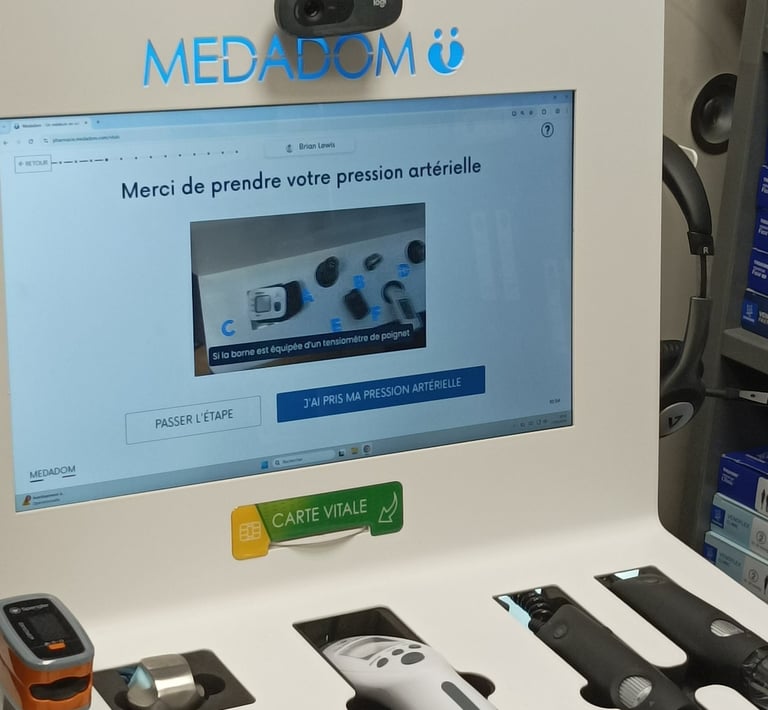
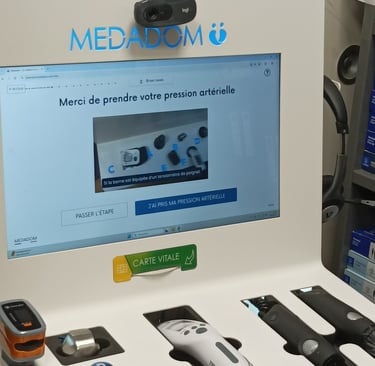
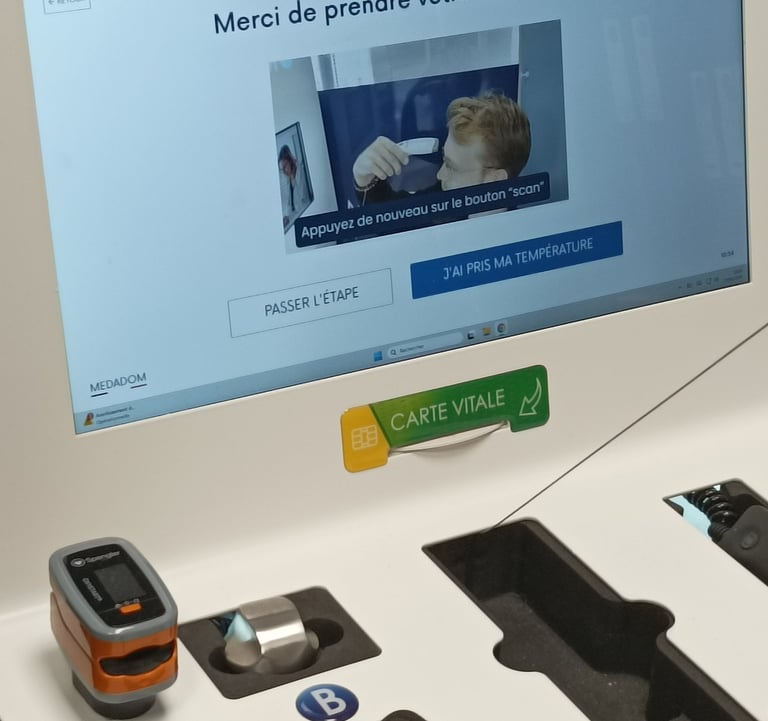
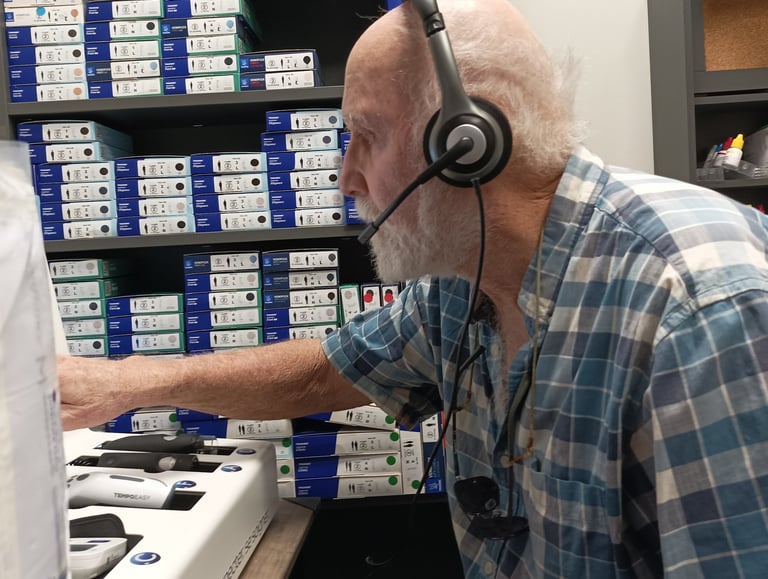
We were shopping in the adjacent supermarket when the text came through. Five minutes later B. was plugged into a headset and communicating with the doctor on the screen. Questions were asked; a diagnosis made; and a prescription duly issued.This was already being relayed directly to the pharmacist. We were soon driving home, secure in the knowledge that B. was receiving the appropriate care. Brilliant!
Of course, it should be said that if B.'s problem had been more serious, then a different system would have sprung into action. By calling 15, one can talk things through with a medical assessor. If this is deemed an emergency an ambulance, and maybe even a doctor will be sent out to you. But as far as B.s problem went, this back up system proved to be perfect. What's more, although this was an automated system, it involved the participation of an actual working doctor. I must say that I remain very sceptical about increased automation however, and especially the dangers posed by AI. As a writer, I am seeing more and more books which have used this element of help, perhaps even exclusively. The same applies to pop music. A certain song was banned from a music competition in Sweden recently, as it was deemed that the songwriter used AI in its creation. But how can we always know? On the other hand, AI has been shown to come up with excellent medical diagnoses , which cannot be ignored. When used as a back- up to the work of doctors, that is fine, but where it is used to reduce the number of doctors in employment, then it is not.