Hope is in the Air
Birds, Bees and Cavorting Toads
2/24/20264 min read
Yesterday , I watched a clip of an interview in my newspaper. It was between a journalist and the world renowned primatologist, Jane Goodall, just before her death last October. When asked what legacy she most wished to leave behind, she answered ... Hope.
She then went on to explain that these are "dark times." The most important thing we can give to all those children we leave behind us is Hope. Hope that things can get better. I thought that to be such an important message for us all.
There have been so many reasons for people to feel down recently: interminable bad weather; winter infections ; and world affairs are all pretty gloomy. I have felt no differently. Even our friendly neighbour whom we pass in the forest did not seem her usual chirpy self yesterday as she expressed concern about 'the state of the world.' Add to this the depressing weather and the ever present omens of climate change, it's not surprising.
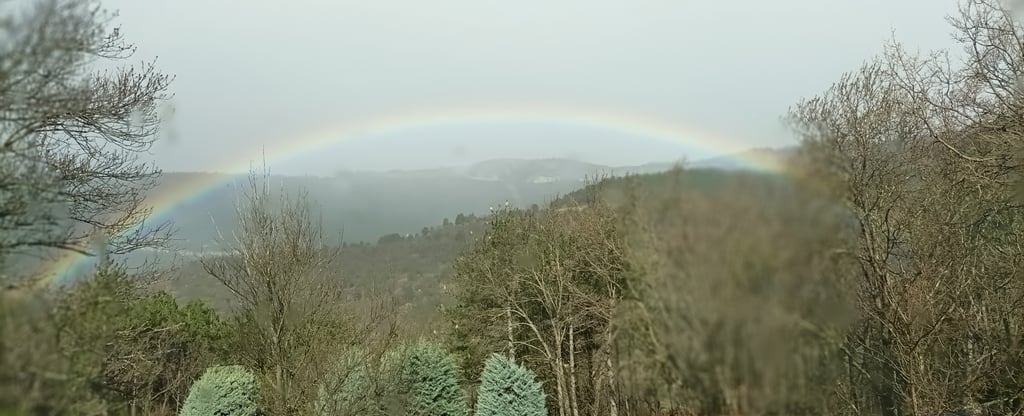
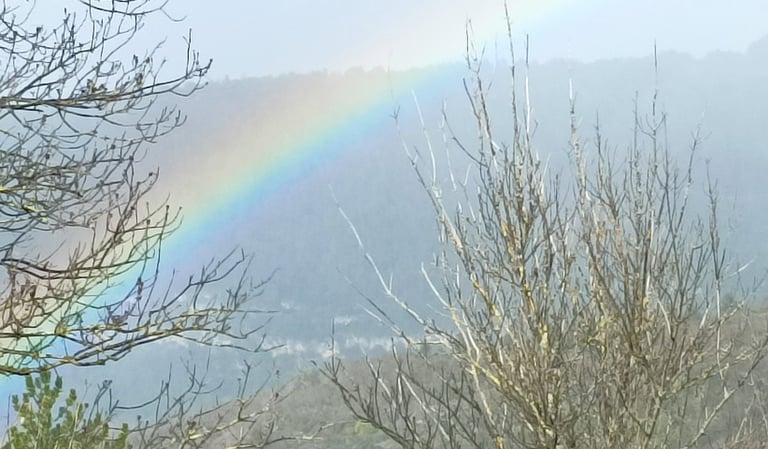
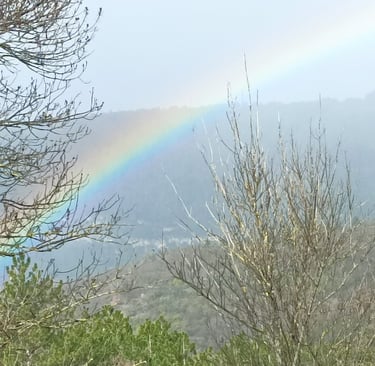
Yesterday, at long last, the sun broke through the clouds, and a broad rainbow appeared over the cliffs of the Bout du Monde. Just a small sign, but enough to bring us hope of better days ahead.
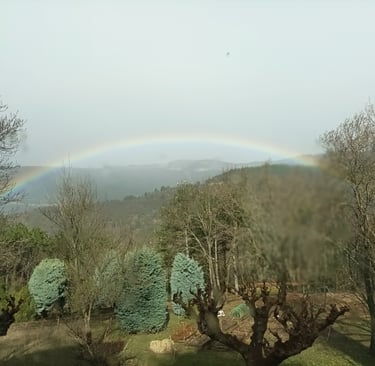
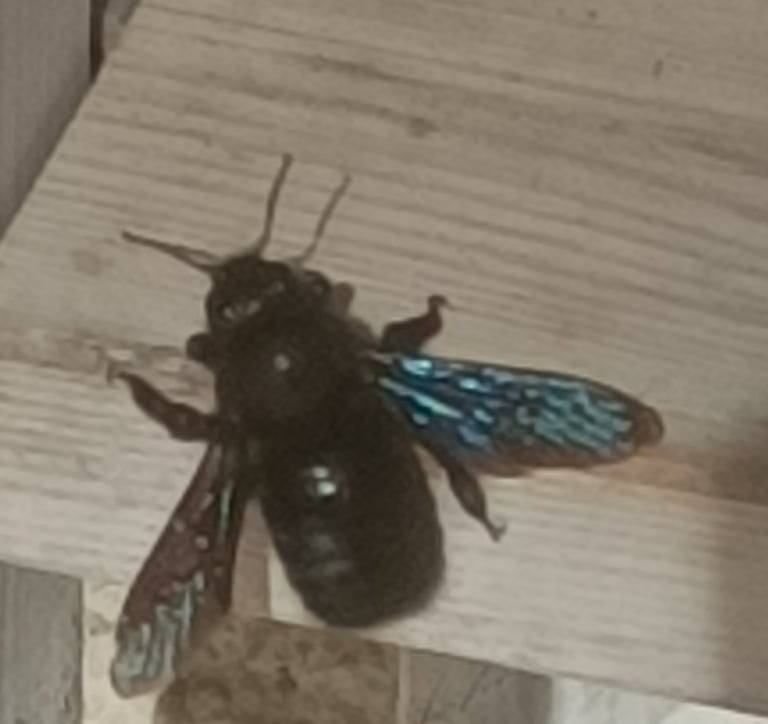
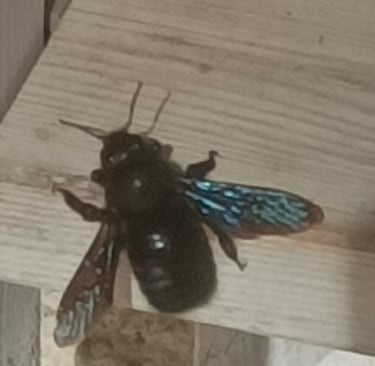
But what do our forest creatures care for our human woes? The sun is shining, the air is mild, and after all that rain, the pond is full, and the ground moist and fertile. I opened our doors this morning to a cacophony of sound. Toads were croaking, birds were singing and bees were buzzing.
Toads
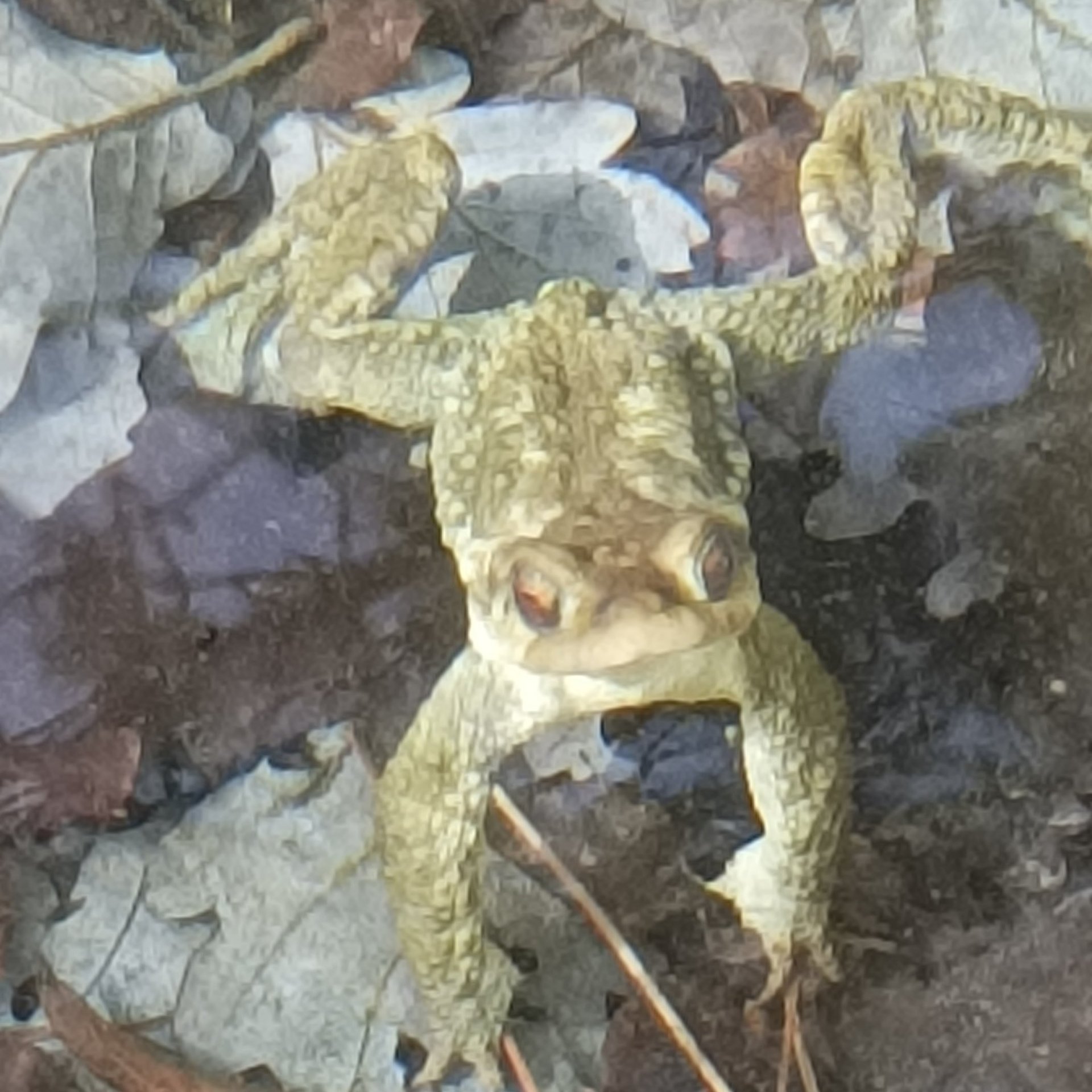
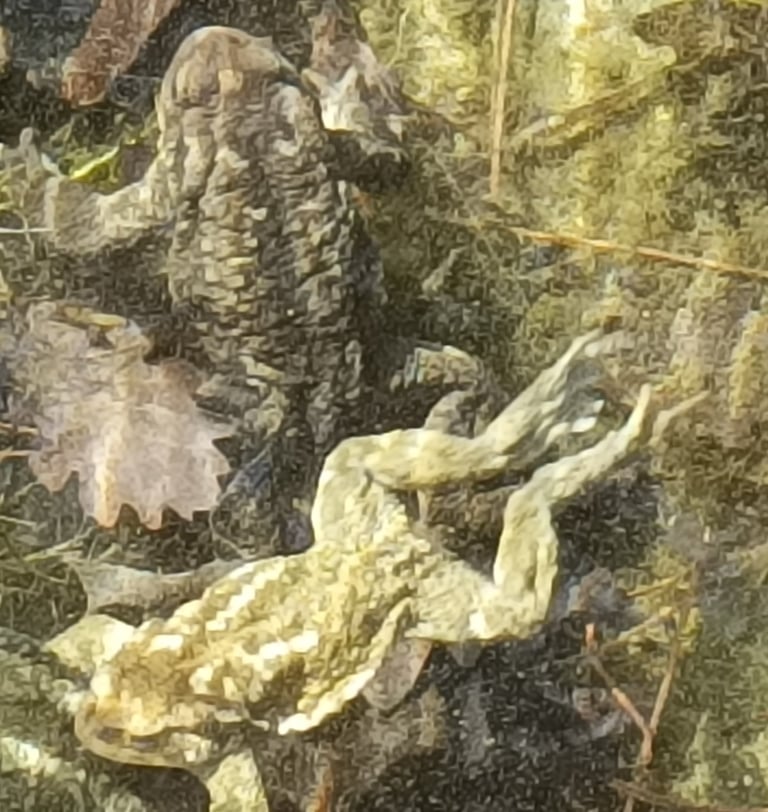
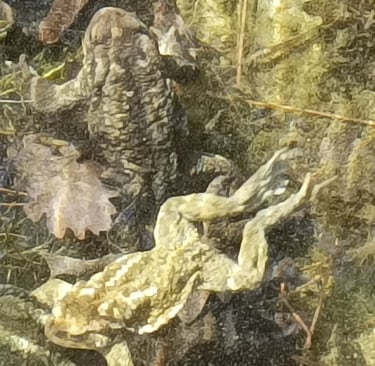
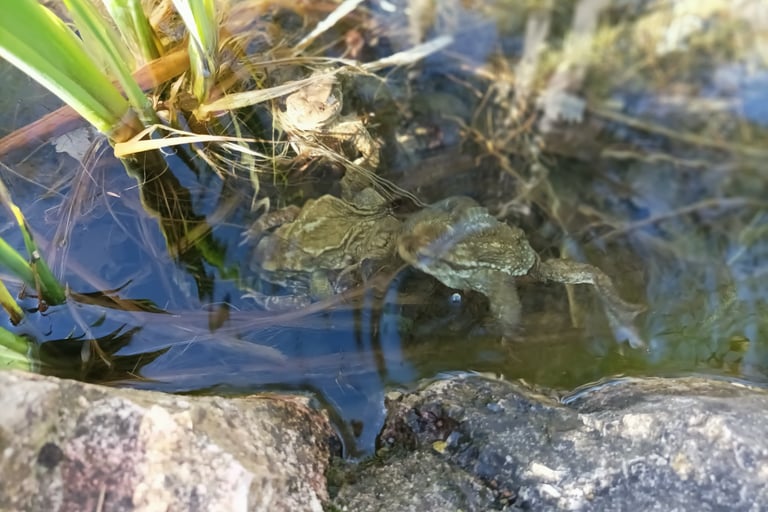
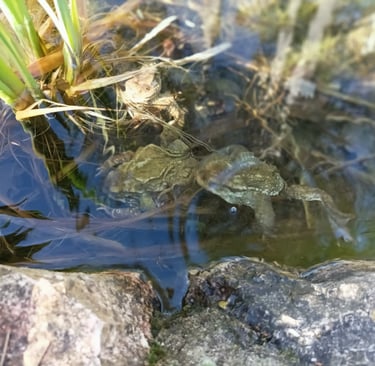
Much to our delight , toads have returned to our pond in force this year. Apparently the first males to arrive call for the others to join them. Toads return to the same pond in which they were spawned , but their distinctive calls help the females to avoid mating with their own kin. We now have at least ten toads, cavorting around our pond, and "leapfrogging" over one another. These are mostly smaller males, whilst two or three larger female common toads have now followed. After a few days of frantic behaviour, they seem to be pairing off. We have come across the occasional pair locked together, both in the water and in the wider garden. Occasionally a poor female may have to contend with two males competing with each other, and trying to mount her simultaneously..
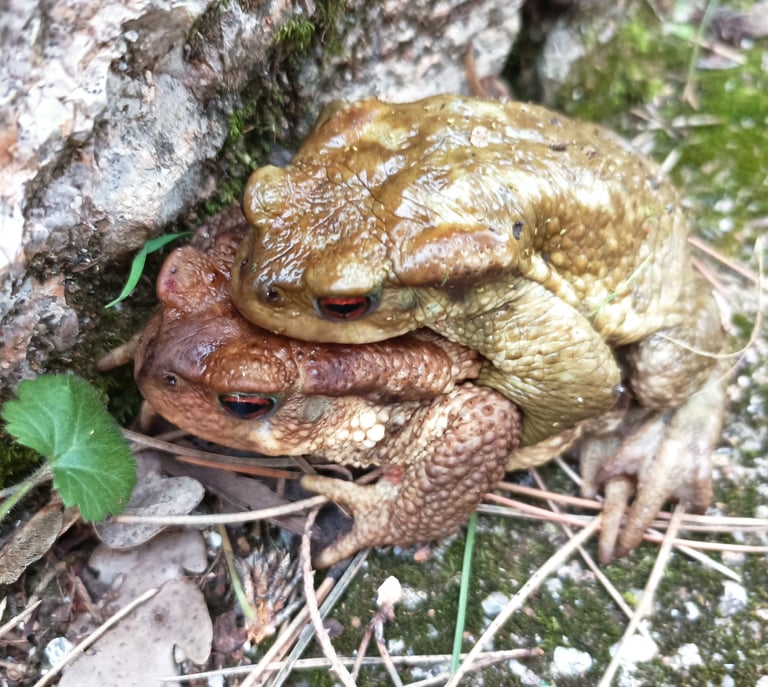
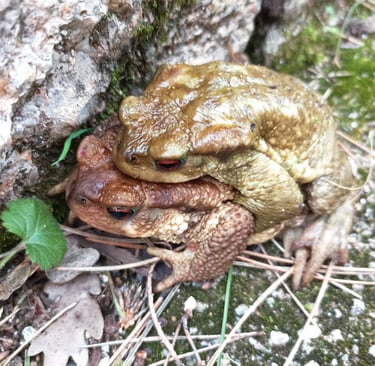
I have always loved toads since I was a child when I spent my time by a pond, and believed that one special toad had become my friend. Accuse me of anthropomorphism if you will, but I am still convinced that toads look us in the eye .
The male toad grips the female with special amplexus, or 'nuptial pads.
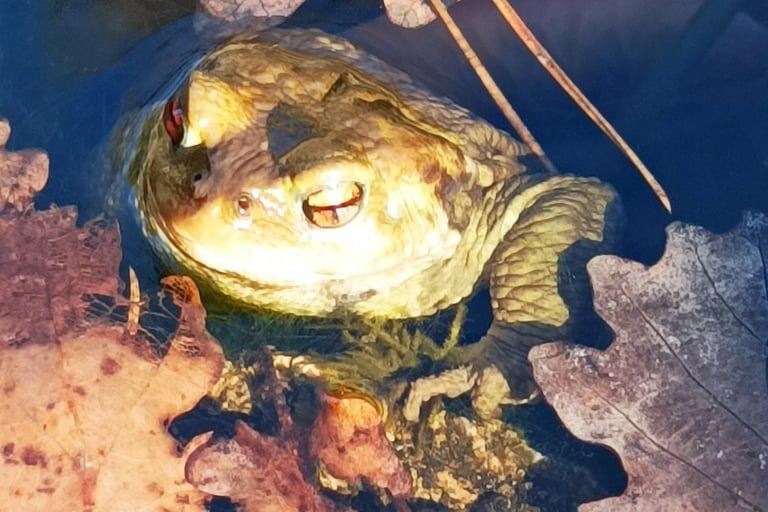
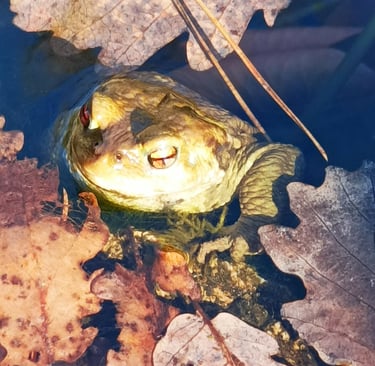
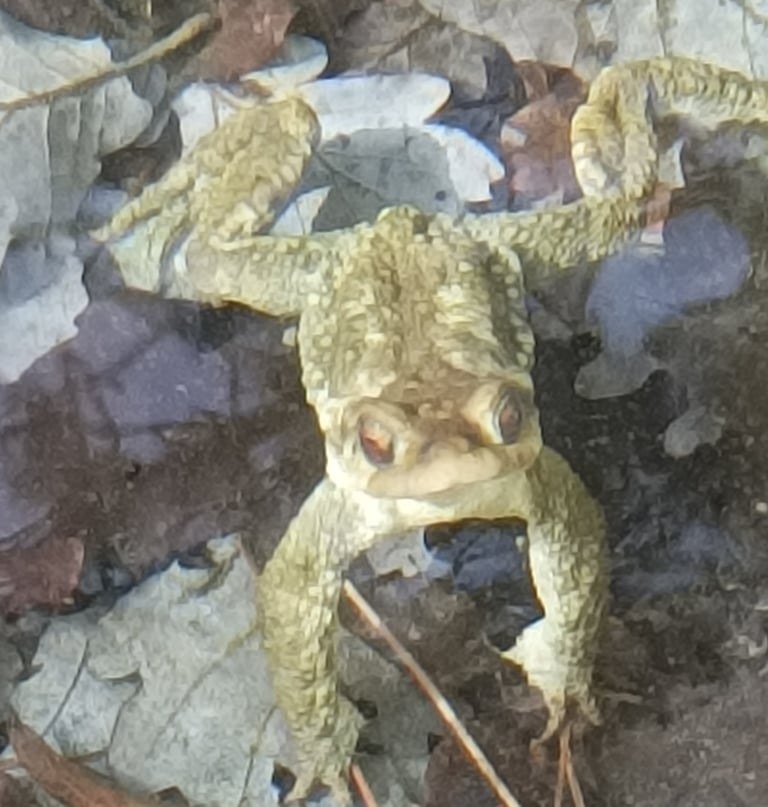
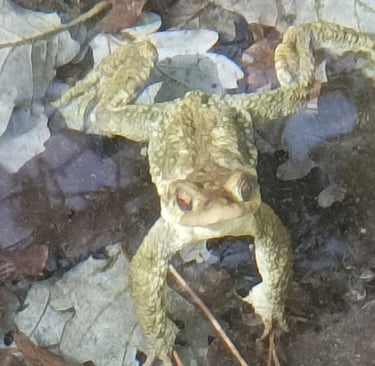
Do you see what I mean?
I shall be looking out for the double strings of eggs amongst our water iris . These will have been fertilised by the males, and will soon develop into tadpoles, which before long, will lose their tails and develop legs. At that time they become toadlets. The little toadlets will gather around the pond's edges, ready to leave us in May. I do hope they come back again next year.
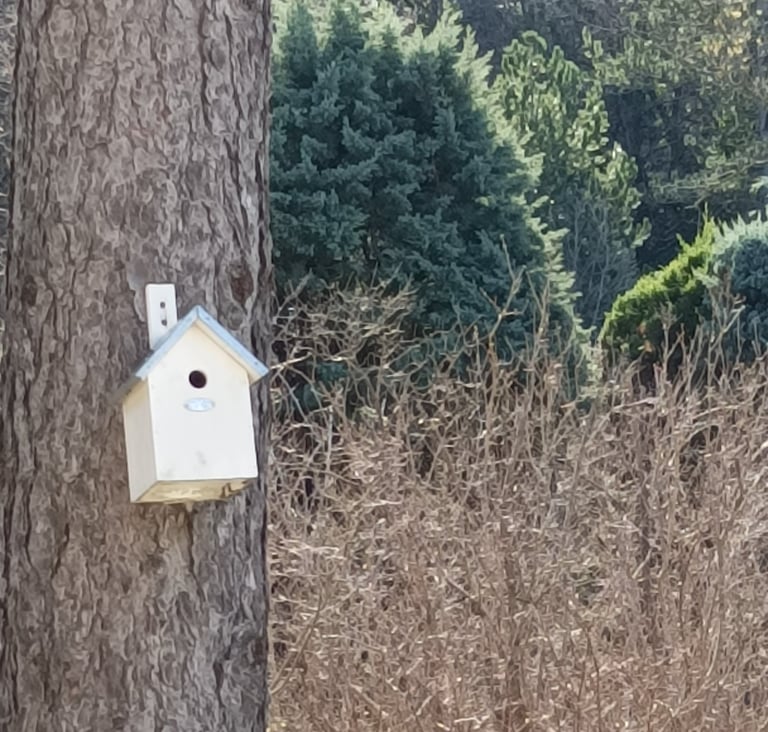
The birds have been scarce all winter, save for the great tit and blue tit who flock to our fat balls. Little by little I spot old favourites returning, like the blackbird and blackcap, but my eye is not as keen as the Merlin Bird app on B.'s. phone. On recording the birds song around us , this app identified : song thrush, great and blue tits, nuthatches and wrens. Its so good to know that the birds are here in force. What's more I spotted a pair of blue tits sizing up one of our bird boxes near the house. Spring has definitely arrived.
As for our bees, well they are as busy as... well... as bees! More about these industrious beings in my next blog.